

What Screen-Free Audio Really Means for Families
Last reviewed: 18 September 2026
“Screen-free” is used widely across children's audio products, but it can mean different things. A clear description should explain who uses a screen, when it is required and what the child experiences.
Three common models
Independent player
The child chooses content directly on a dedicated player, card or figure. A phone may be needed for initial setup but not every listening session.
Adult-managed audio
A grown-up uses a phone to select and start content while the child listens through a separate speaker or toy. This is how ToyPal One currently works.
Child-facing app
The child browses, watches or interacts with stories on a phone or tablet. This may be useful in some situations, but it is not the same experience as audio-led listening.
What screen-free means for ToyPal One
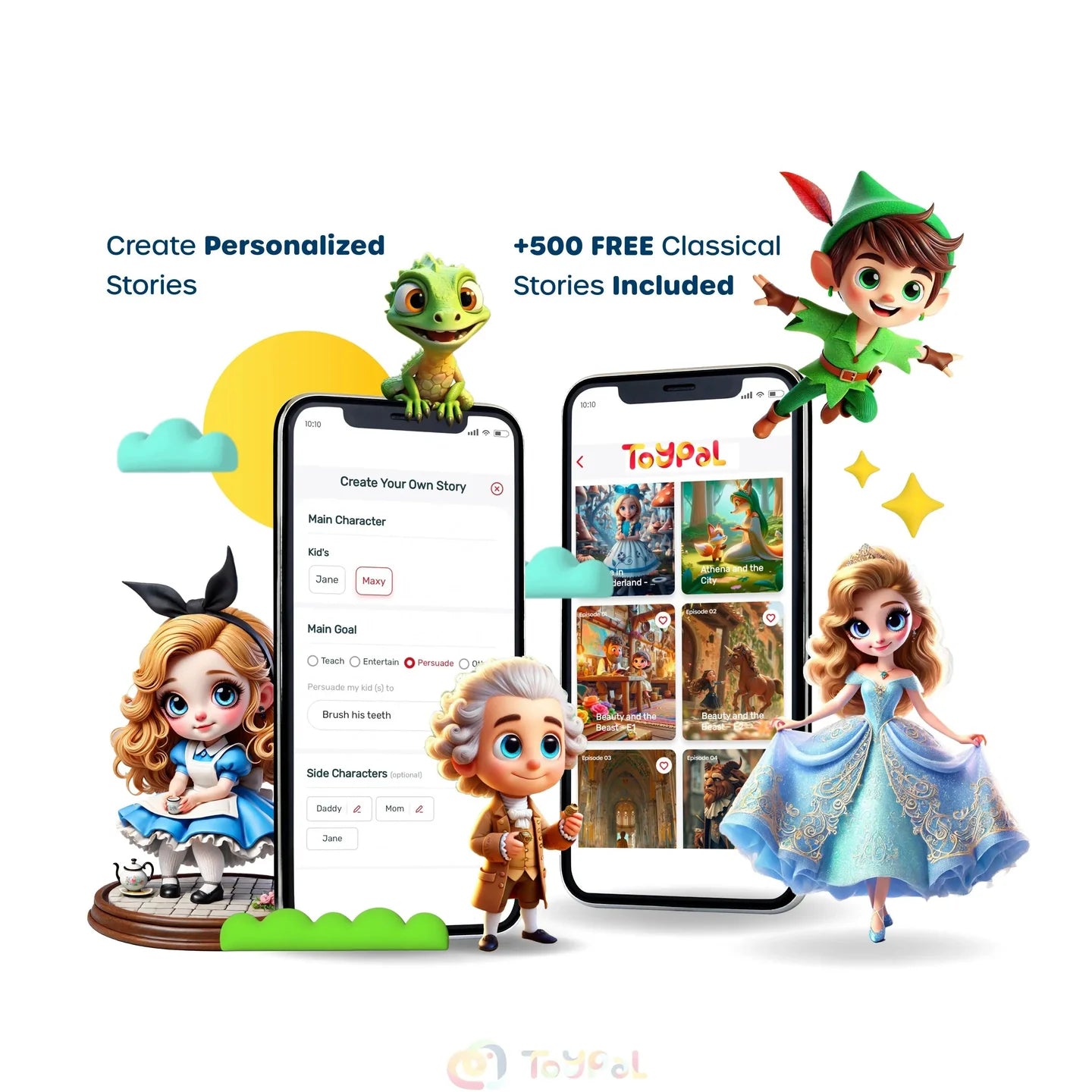
The child does not need to watch or operate the phone during the ToyPal listening experience. A parent or caregiver uses the ToyPal app to select a story, song or lullaby, then the audio is sent by Bluetooth to the ToyPal One device attached to a compatible soft toy.
ToyPal One is therefore parent-managed and audio-led, not completely phone-independent. Child-independent and offline playback are future ToyPal Two/next-app goals and are not current ToyPal One features.
Questions to ask before choosing an audio toy
- Does the child need to look at a screen?
- Is a phone required for every listening session?
- Can the child choose content independently?
- Does the device use a microphone, camera or voice recognition?
- What content is included and what requires another purchase?
- Can it work away from Wi-Fi or without an internet connection?
- Who controls personal information and privacy settings?
Audio is not a guaranteed learning outcome
Listening to stories can be part of conversation, shared reading and imaginative play. However, a commercial audio product should not promise that passive use alone will improve language, cognition or school performance. Adult interaction, content quality, the child and the wider setting all matter.
For a broader comparison checklist, read what parents should check before buying a storytelling toy. For the current product, see ToyPal One.


