

Why Shared Storytelling Matters: An Evidence-Informed Guide
Last reviewed: 18 September 2026
Storytelling can be a book at bedtime, a made-up adventure on a journey, an audio story heard together or a family memory retold at the dinner table. The format may change, but the most valuable part is often the shared attention around the story.
This guide separates what broader evidence says about adult-supported language and story activities from what any individual product can promise. ToyPal is a storytelling tool; it is not a medical, therapeutic or educational intervention.
What evidence supports
UK early-years guidance encourages adults to read and tell stories regularly, invite children to comment, explain unfamiliar words and ask what might happen next. The emphasis is on interaction between the adult and child, not passive exposure to a device.
The Education Endowment Foundation also identifies structured talk, questioning, reading aloud and book discussion as common features of oral-language approaches. Those findings concern supported activities in educational settings. They should not be treated as proof that a particular storytelling toy will produce a guaranteed developmental result.
Five useful ingredients for shared storytelling
1. Familiarity
A familiar character, place or soft toy can give a child an easy way into a story. Ask what the character might see, hear or feel rather than testing the child for a correct answer.
2. Choice
Offer a small number of suitable choices: a calm story, an adventure or a song. A limited choice can feel manageable while still giving the child a voice in the activity.
3. Conversation
Pause when it feels natural. Invite a prediction, notice a new word or connect the story to something the child already knows. There is no need to interrupt every scene.
4. Repetition
Children often enjoy returning to the same story. Repetition can make it easier to anticipate favourite moments, join in with phrases and notice details missed the first time.
5. Play afterwards
Draw a scene, act out a moment, build a setting from cushions or invent a different ending. The story becomes a starting point for play rather than an isolated piece of content.
Where personalised stories fit
Personalisation can make a story feel recognisable by including parent-approved details such as a first name, family member, pet or favourite soft toy. It does not guarantee attention, learning, improved sleep or behaviour. Adults should review the choices they submit and decide what is appropriate for their child.
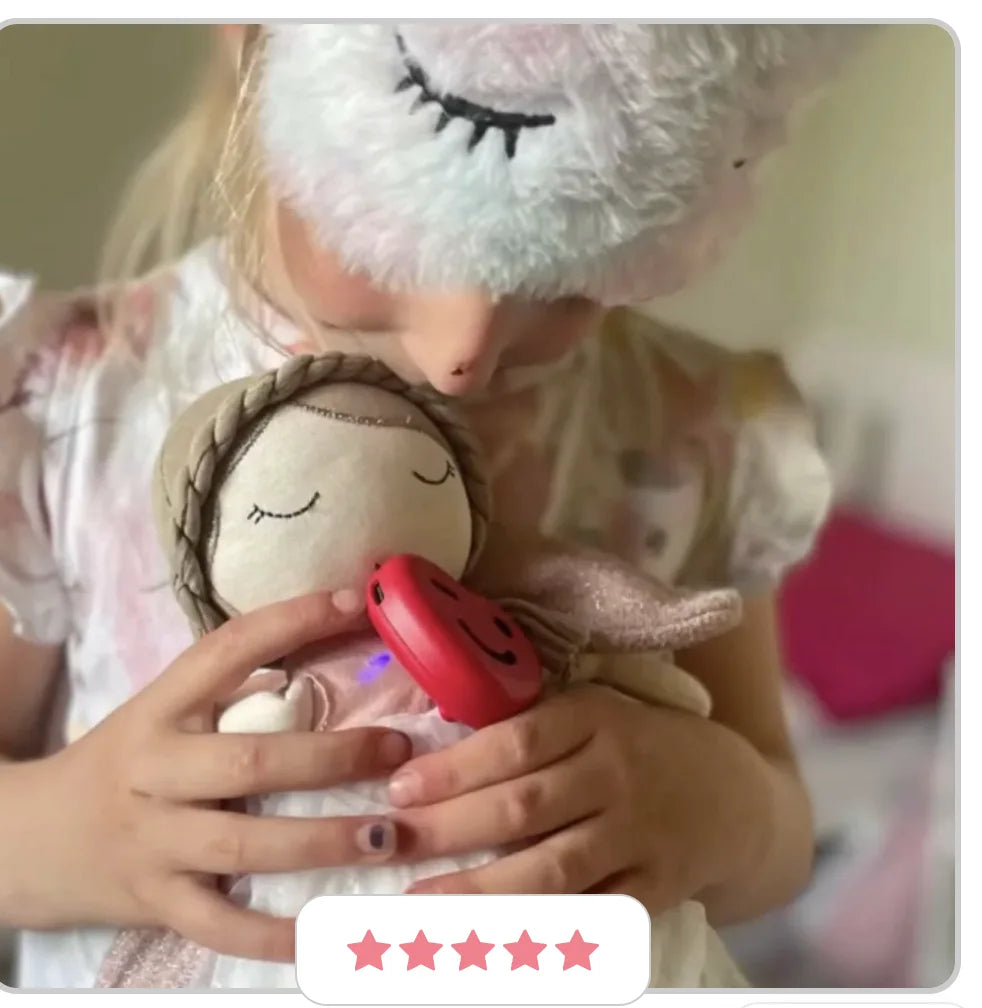
With ToyPal One, a grown-up selects content in the ToyPal app and audio plays through the heart-shaped device attached to a compatible soft toy. The device itself has no microphone or camera. Learn more about the product and the distinction between current and future features in our parent guide.
About ToyPal's research
ToyPal has also supported preliminary exploratory research into personalised storytelling. The early work has important limitations and does not establish clinical or guaranteed developmental outcomes. Read the study context, limitations and University of East London ethics reference on the ToyPal research page.


